About
The Michigan Public Meeting Tracker started as a simple idea. What if Michigan had C-SPAN?
Public Research Initiative was founded in November 2025. At that time, we were scouring township agendas in search of the next data center proposal. It became clear that the public needed a better tool.
It didn't exist. So we built one ourselves.
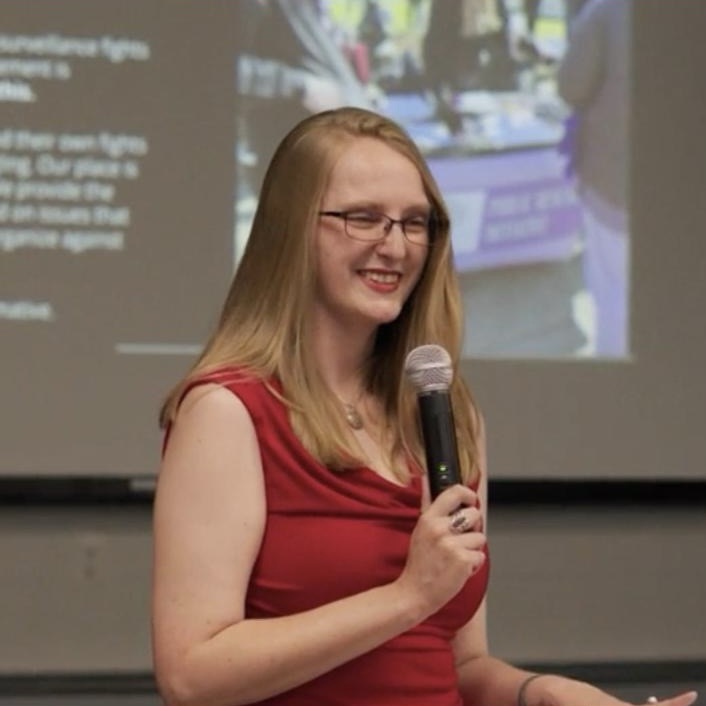
Sabrina King Dougherty
Sabrina King Dougherty is the Founder and Lead of the Public Research Initiative, a collaborative built of researchers, organizers, activists, and citizens who share the core belief that power comes from knowledge. Her primary goal in organizing is education, accessibility of resources, and community-based action, which are foundational elements of her organization.
Sabrina’s first experience with activism began in elementary school, speaking out to her school board multiple times as a child, and her throughline of power sourcing from knowledge continued from there. Through her teen years, she dedicated herself to listening to as well as amplifying the voices and lived experience of those actively fighting for their civil rights. During this time she became an activist in many different statewide and national movements that took issues to the streets of Michigan.
Her quest for knowledge continued as she pursued a Bachelor of Science (B.S.) in Research Psychology at the University of Michigan-Flint, with a minor in Sociology. Through her studies she was hired into the university’s Legal and Forensic Psychology Research lab, where she continued to work on a volunteer-basis for two years post-graduation on projects aimed at lowering false incarceration rates examining threat assessment.
She continued her queries through work with political activist organizations, where she discovered a gap in the political activist landscape – a gap that could allow researchers and organizers alike to come together, pool their resources, and look at large-scale issues in a more collaborative way that could have a greater impact.
This gap is where the Public Research Initiative first found its footing: amid Michigan’s full-on assault from hyperscale AI data centers, surveillance, and big tech, out of a love for shared knowledge and a passion for protection of people and nature. PRI actively reaches into communities to meet people where they are and assist them in enacting real change through publicly available research. Sabrina has made it a point in PRI’s organizing to put the community voice first, take the public’s lead on what is needed, and to leverage the expertise of each person in her team to close gaps in public knowledge.
Sabrina is the proud member of an IBEW, UAW, and Teamsters family, and carries the generational torch of organizing; a passion she shares with her cousins and circle of friends. She enjoys kayaking and camping with family, bonfires with friends, concerts and community events, and most of all, grounding herself in the dirt of her garden or in the woods of her family’s Northern Michigan property.
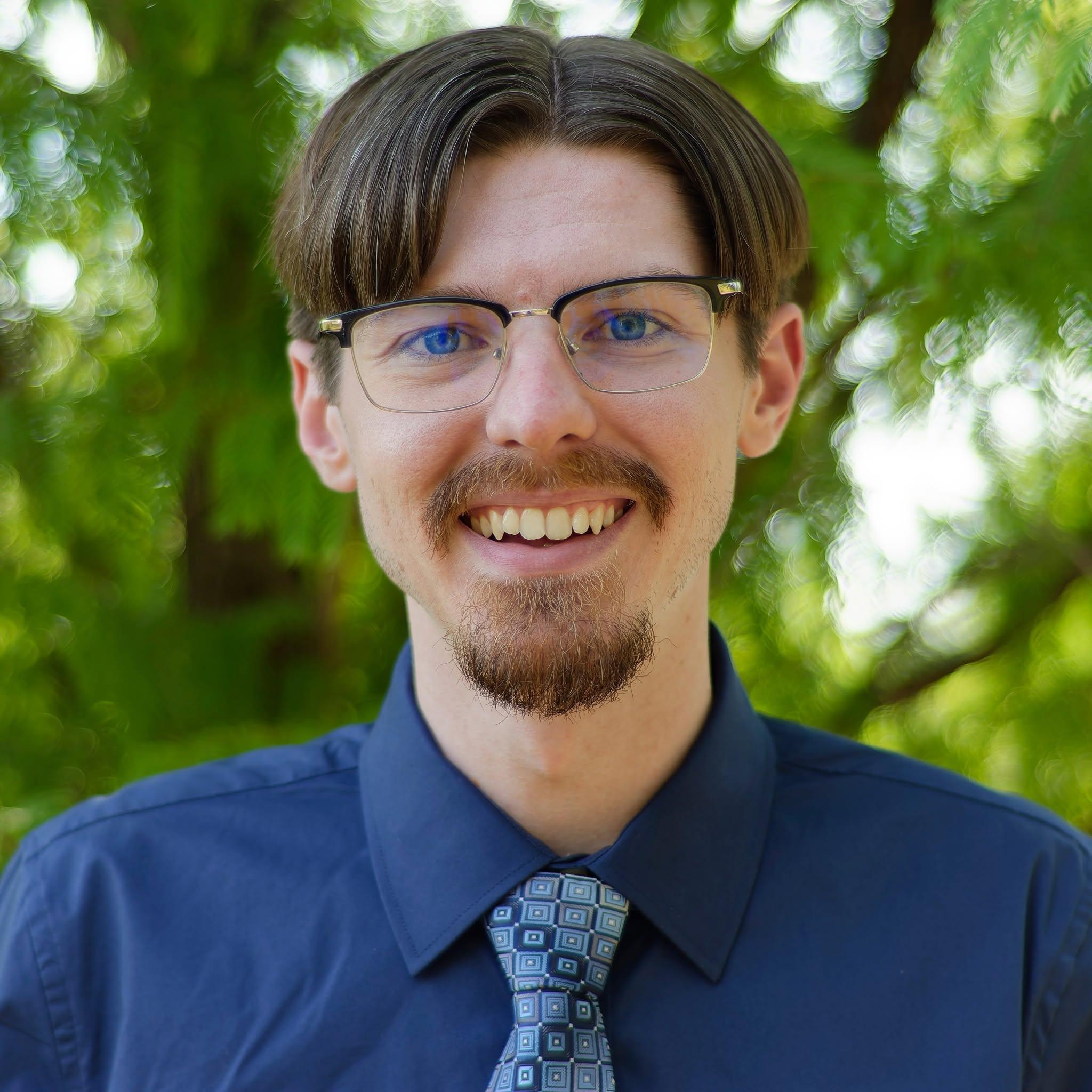
Sean Webber
Sean Webber is a native of Armada Township in Macomb County, where his family has lived since 1996. His public life began early. At 17, he gave his first presentation to the Armada Township Board of Trustees, raising the alarm on the lack of reliable internet access in his hometown. That early testimony set the course for years of civic work on digital equity and broadband expansion, culminating in a successful effort that helped secure a $3.3 million grant to bring high-speed internet to 1,100 Armada Township households.
Webber has a professional background in Information Technology, and that background shapes his belief that access to information is inseparable from self-government. He describes the internet as the modern-day equivalent of the library the founders knew, a decentralized commons of knowledge a free people need to govern themselves and preserve liberty. He points to Paul Baran, the RAND Corporation engineer whose vision of a network with no central point of failure became the blueprint for ARPANET.
This belief in decentralization drives his opposition to hyperscale AI data centers, which he argues invert the internet's architecture, concentrating knowledge and infrastructure into privately controlled points of failure, what he calls a Library of Alexandria scenario for modern society. He's direct that these projects carry real costs, from strain on electric grids and ratepayers to risks to water resources like the aquifer beneath Armada Township.
When the Prologis rezoning proposal in Washington Township surfaced in December 2025 with almost no public notice, Webber became a community organizer with Stop Washington Township Data Center, preparing independent technical analysis and helping residents mobilize on a compressed timeline. He later gave public comment before the Michigan Public Service Commission on grid impacts and regulatory gaps in AI infrastructure. In February 2026, he joined the Public Research Initiative as a researcher, helping identify communities across Michigan at elevated risk of rapid data center rezoning near high voltage transmission infrastructure. Webber notes he wears both hats, township organizer and PRI researcher, because the fight is one and the same.
At the center of it all is a belief in digital humanism, that technology should serve communities rather than displace them, and that the systems built to hold a nation together should stay accountable to the people who depend on them. For Webber, that's the throughline connecting a 17-year-old's testimony about broadband access to a grown man's fight against hyperscale data centers, a conviction that a more informed public makes for a more perfect, more durable union.